Weddings
Why Midtown steakhouses became a favoured format for small New York weddings, and what the restaurant offered couples.
Located in the heart of Midtown Manhattan, the venue was presented as offering elegance combined with a comfortable, unstuffy setting — a room suited to a memorable wedding and to a range of other events. The published material emphasised that details were arranged by the kitchen and floor staff around each couple's own style and budget.
That description understates something worth spelling out, because the restaurant wedding is a genuinely distinct format from the banquet-hall wedding, and it suits a particular kind of celebration extremely well.
Why a steakhouse works for a small wedding
The food is the point
Banquet catering is built to produce two hundred identical plates simultaneously, and the menu is engineered around that constraint. A restaurant kitchen cooking for fifty is cooking the food it cooks every night. For couples who care about what their guests actually eat, this is the single biggest argument for the format.
The room is already finished
A dining room with linen, glassware, lighting and a working bar needs almost nothing added. A raw event space needs everything rented. The saving is substantial, and so is the reduction in planning load.
Scale matches the guest list
New York weddings have trended smaller for years. A restaurant that comfortably seats sixty to eighty is correctly sized for a celebration that a four-hundred-capacity ballroom would make feel sparse.
The timeline is shorter
Restaurant weddings typically run four to five hours rather than a full day, which suits city weddings where guests are travelling across boroughs and the reception is the event rather than one component of it.
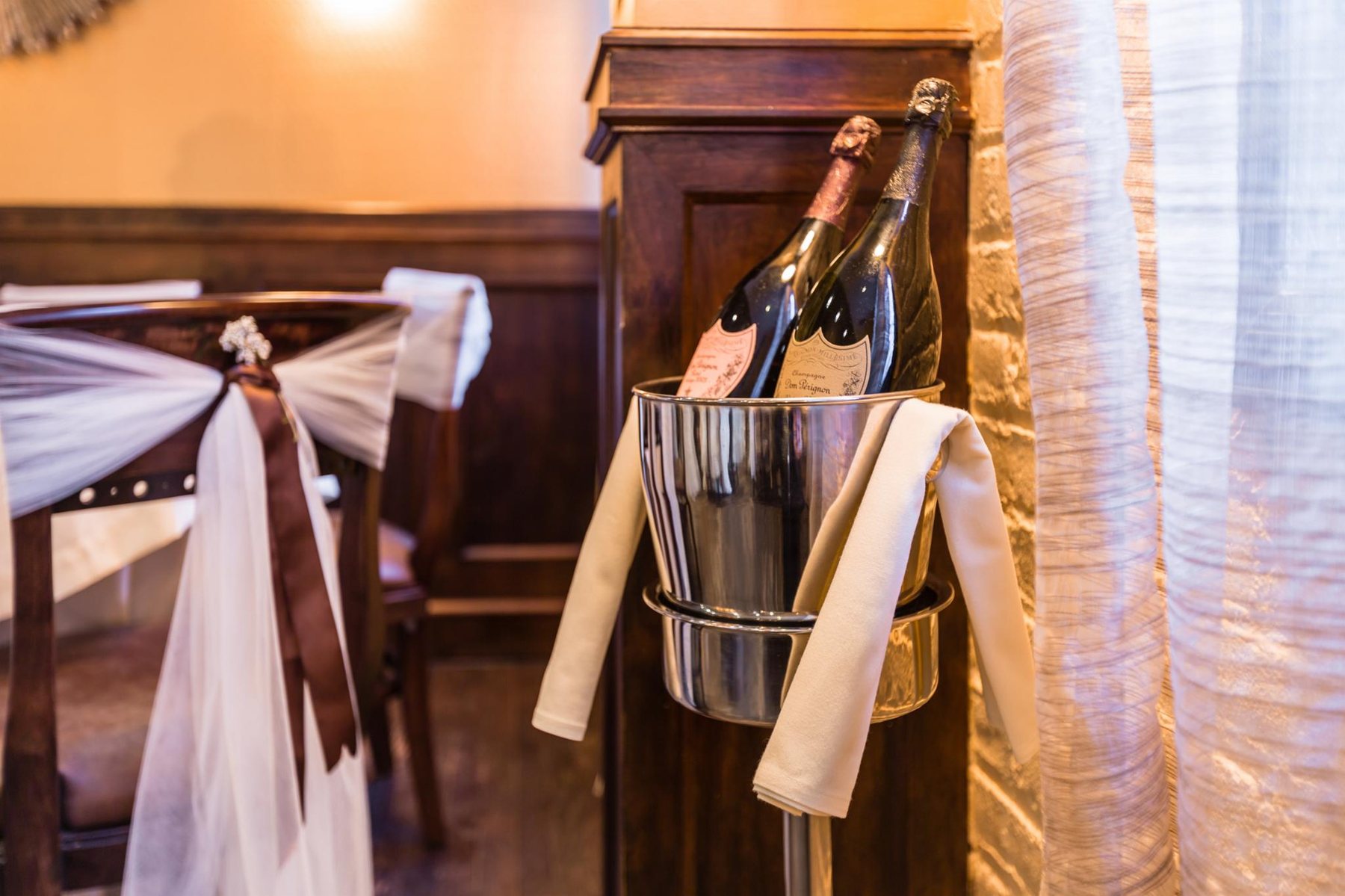
What the restaurant offered
- Seated dinners in the main dining room, with the bar used as a reception area beforehand.
- Prix fixe menus in tiers, with the beef selection scaling by tier.
- Open bar packages priced per person per hour.
- Passed hors d'oeuvres during the reception period.
- Menu customisation, including for dietary requirements — the Halal beef section made this a practical venue for couples for whom that mattered.
- Full buyouts for ceremonies and receptions held in the same space.
Planning a restaurant wedding in Manhattan
Book the date around the venue's economics
Restaurants give their best terms on the nights they would otherwise be quiet. In Midtown East that generally means Sunday through Tuesday and much of the summer, when the corporate dinner trade thins out. A Friday in October is the most expensive date you can pick.
Understand what the minimum actually covers
Food and beverage minimums are usually quoted before tax and service. Ask for a sample invoice at your expected guest count, with every line included, before signing anything.
Confirm ceremony logistics separately
Not every restaurant can host a ceremony as well as a reception. If it can, the room usually has to be reset between the two, which takes time and sometimes staff you are paying for.
Ask about noise and music
Restaurant rooms in residential blocks — and East 53rd Street is one — often have practical limits on amplified music and a firm end time. Establish both early; they shape the entire evening.
Plan the beef question deliberately
At a steakhouse with a Japanese beef programme, a Kobe course for every guest will dominate the budget. A common and effective compromise is a Kobe tasting portion as one course among several, or Kobe offered at the head table with Prime and Wagyu across the room.
Note on this page. This site is an independent editorial archive. It does not take wedding enquiries, hold dates, quote prices or make bookings. The guidance above is general and applies to planning a restaurant wedding anywhere in Manhattan. Contact venues directly to arrange anything.