212 Steakhouse
The Manhattan dining room that brought certified Japanese Kobe beef back to the East Coast — documented here as an independent guide to its kitchen, its beef programme and its place in New York steakhouse history.
The only restaurant on the East Coast serving authentic Kobe beef
For most of the twenty-first century, “Kobe beef” on an American menu meant almost nothing. The words were legally unprotected in the United States, and they attached themselves to sliders, hot dogs, burger patties and mid-grade steaks with equal confidence. Actual Kobe — beef from purebred Tajima-gyu cattle raised and processed inside Hyogo Prefecture, certified carcass by carcass — was not being imported at all. A ban tied to disease control had closed the pipeline, and when it reopened only a handful of establishments in the entire country cleared the paperwork to serve it.
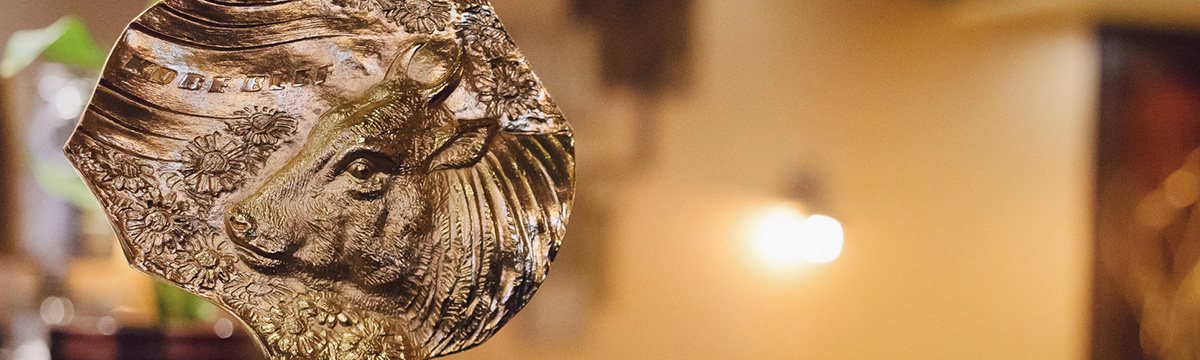
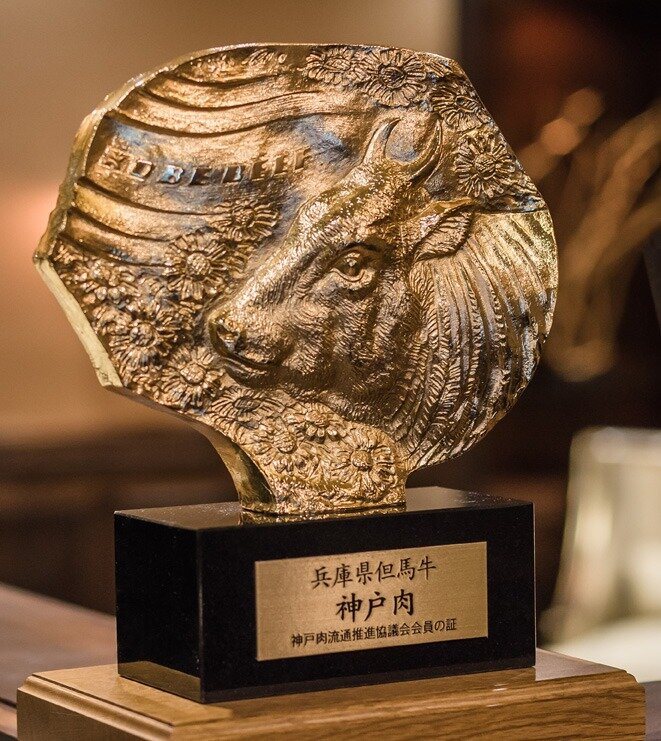
212 Steakhouse was one of them, and for a stretch of years it was the only one east of the Mississippi. The restaurant took great pride in being the first and only New York member of the Kobe Beef Marketing & Distribution Promotion Association, the Hyogo body that governs the designation from Japan. That membership is not a marketing badge that can be bought. It requires a verifiable supply chain, a documented cold chain, and a willingness to be audited — and it carries the obligation to display the association's certification for the specific animal on the plate.
This site documents what that restaurant served, how the beef reached the table, and why the distinction between certified Kobe and the far larger category of “Kobe-style” beef is worth understanding whether or not you ever sat at one of its tables.
What certification actually requires
The Kobe designation is one of the most tightly policed food names in the world, and the requirements are cumulative rather than optional. An animal has to satisfy all of them, not most of them.
Bloodline above everything
Lineage defines the texture of the beef before feed, climate or ageing has any say. Only pure Tajima-gyu cattle — a strain within the Japanese Black breed — are eligible. Tajima-gyu is regarded as the pinnacle of Japan's domestic Wagyu lines, and the population is small enough that the registry tracks individual animals rather than herds. Crossbreeding with Wagyu from other prefectures is avoided even now, specifically to keep the bloodline intact.
Place of birth, raising and slaughter
The animal must be born, raised and processed within Hyogo Prefecture. A Tajima-gyu calf exported and finished elsewhere produces excellent beef, but it is not Kobe. This is the clause that disqualifies almost every American product using the word.
Grading thresholds
Carcasses are assessed on yield grade and on a beef marbling standard that runs from one to twelve. Kobe certification demands a yield grade of A or B and a marbling score at the upper end of the scale, alongside minimum standards for meat colour, firmness and fat quality. Gross carcass weight is capped as well — larger is explicitly not better.
Traceability
Every certified carcass receives an identification number and the association's chrysanthemum seal. Restaurants serving genuine Kobe are expected to be able to produce the certificate for the lot they are cutting from. It is the closest thing in the beef world to a wine appellation with teeth.
Why Tajima-gyu produces beef that behaves differently
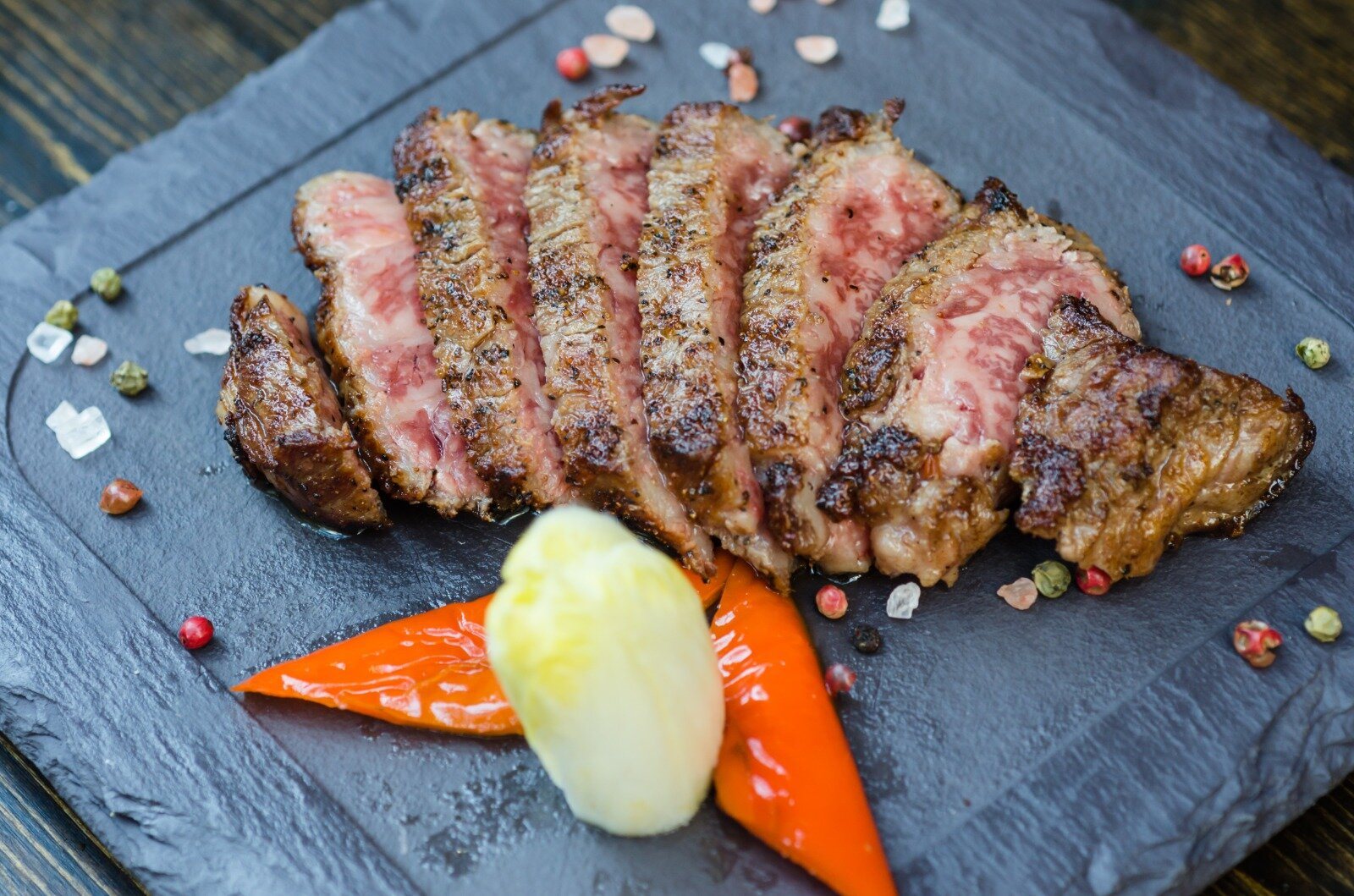
The eating quality people describe when they talk about Kobe is not simply “a lot of fat”. It is a specific structure of fat, distributed through the muscle in fine threads rather than pooled in seams — the pattern Japanese butchers call shimofuri, or “fallen frost”. Because the intramuscular fat carries an unusually high proportion of oleic acid, it begins to soften at temperatures well below those of ordinary beef fat. Some of it is already yielding at body temperature, which is the physical basis for the melt-in-the-mouth description that follows the beef everywhere.
Several conditions in the Tajima region reinforce this. The cattle come from a mountainous strip on the northern side of Hyogo Prefecture, facing the Sea of Japan, with few open fields. The breed developed there as a small, tight-bodied working animal capable of sharp turns on narrow terraces and of carrying loads. Descriptions of Tajima cattle appear in Japanese chronicles written at the beginning of the Heian period, more than a thousand years ago. Mineral-rich water, soft meadow grazing and a wide gap between daytime and nighttime temperatures are all credited by Hyogo producers with shaping the result.
Small frames, high yield
Tajima-gyu animals have thin, resilient skin, soft hair, and firm musculature over thin bones with little subcutaneous fat. The practical consequence is a high percentage of edible meat relative to carcass weight — a quality that made the breed valuable long before marbling scores existed.
Seedstock and the Tsuru lines
Because Tajima-gyu cattle are genetically consistent, they are used as motoushi, or foundation seedstock, in Wagyu breeding across Japan. Within Tajima-gyu, particularly stable strains are known as tsuru, and cattle descended from them as tsuru-ushi. Three substrains remain in active use, each with dominant characteristics carried down through successive generations. Their genes are inherited by branded beef programmes in prefectures all over the country, which is precisely why Hyogo guards the pure line so carefully.
The steak programme, cut by cut
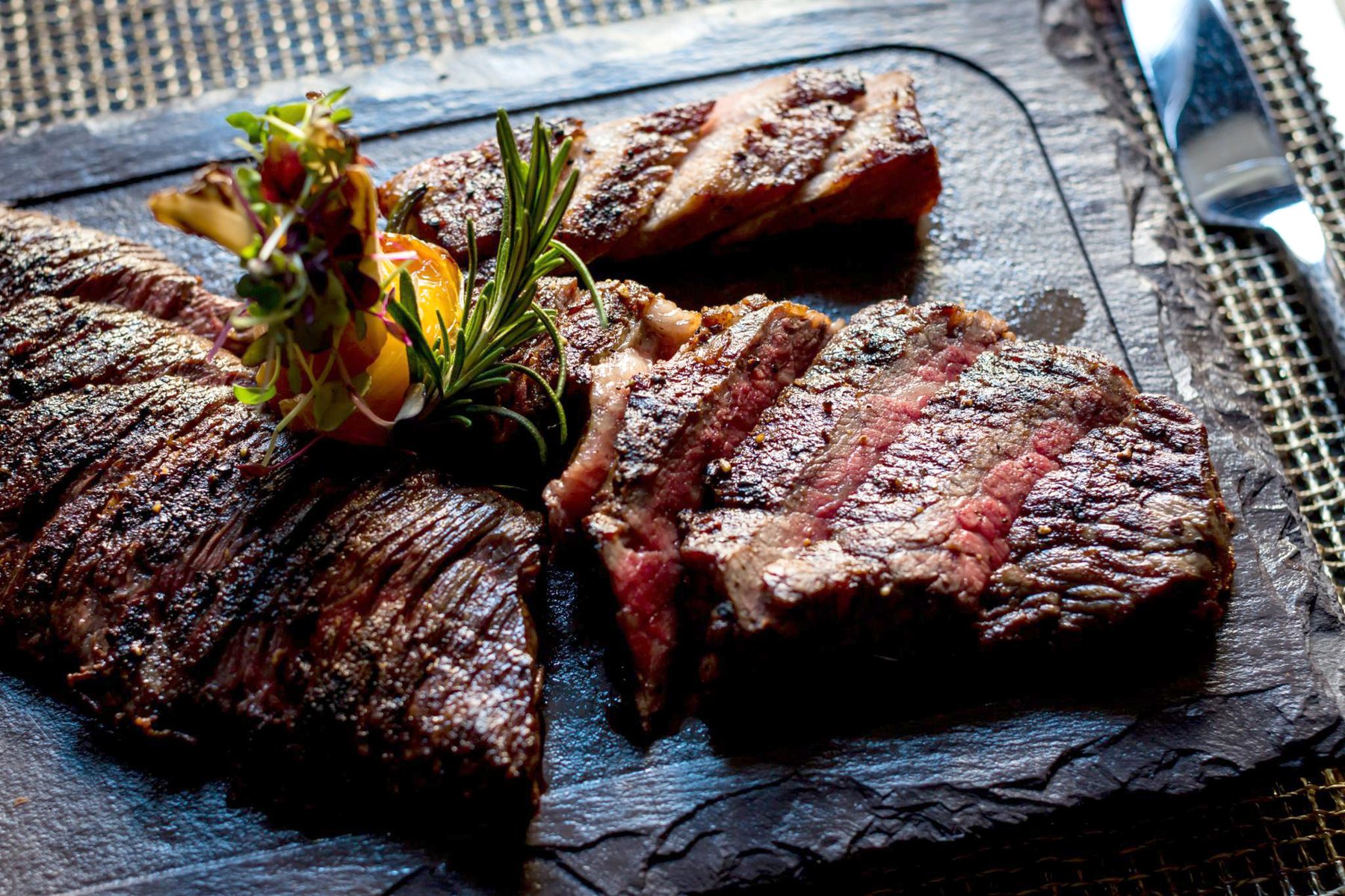
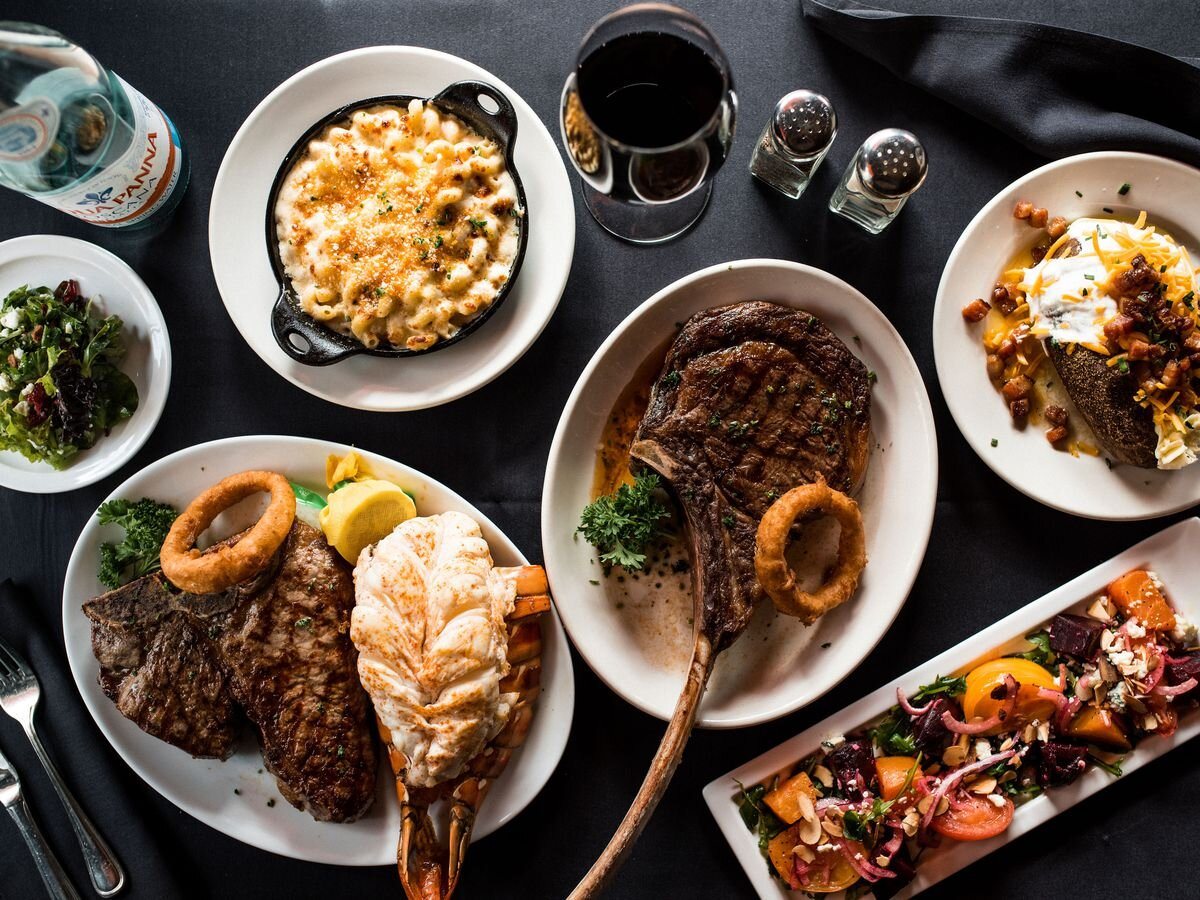
Kobe was the headline, but the card behind it was a full American steakhouse list. The restaurant's own framing — making inaccessible cuts of beef accessible — showed up in how the menu was structured: Japanese beef priced by the ounce so that a tasting portion was within reach, and conventional steaks priced against the Midtown market.
Certified Japanese Kobe
Ribeye, striploin and tenderloin were each offered from a three-ounce minimum. A Kobe tasting set the three cuts side by side at three ounces apiece — the most informative way to eat the beef, because the differences between the three are unusually legible at this level of marbling. A gold-leaf preparation ran as a six-ounce showpiece.
Australian Wagyu
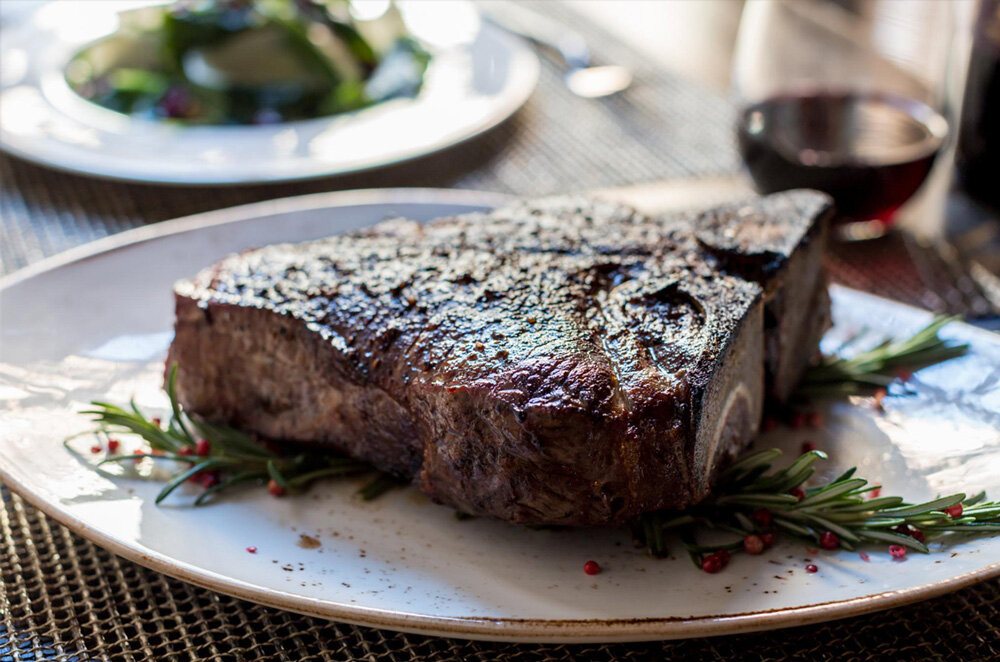
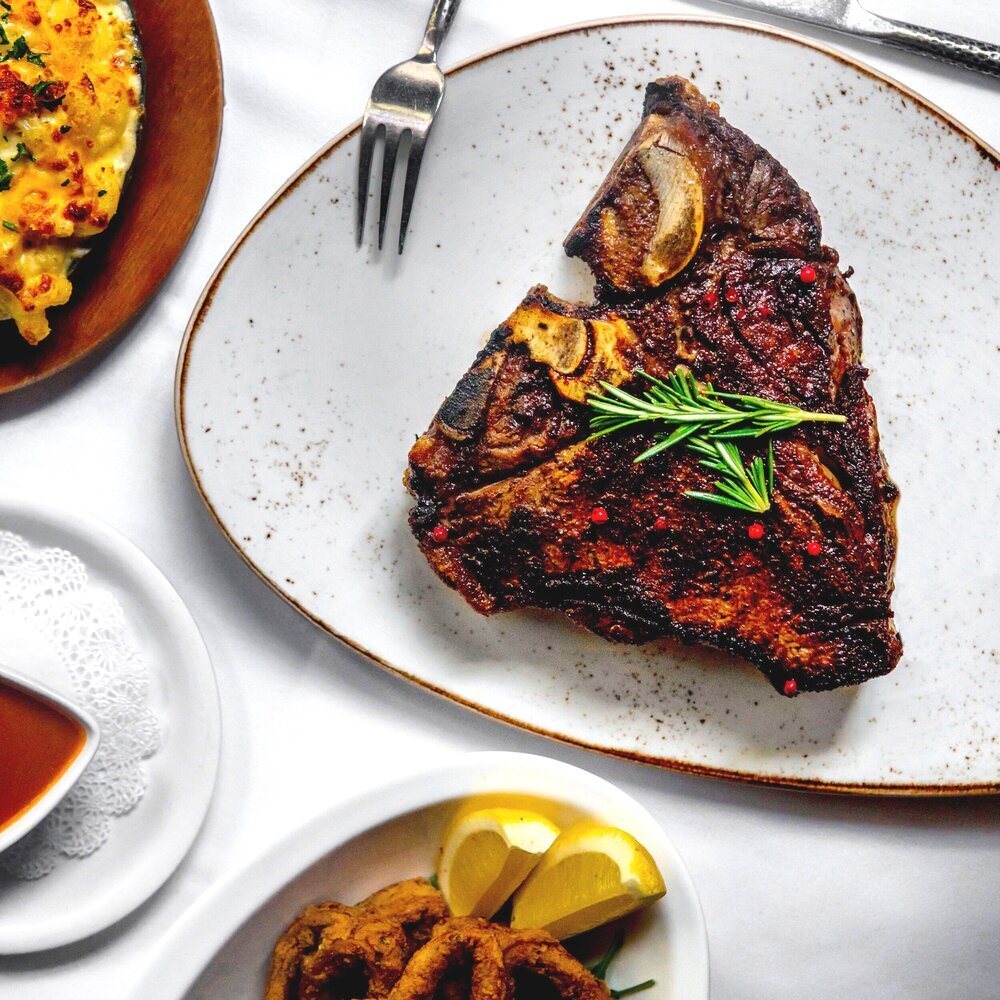
Wagyu-genetics cattle raised in Australia occupy the tier below Japanese beef: still heavily marbled, but with a firmer chew and a longer finish that suits larger portions. The list ran to a ten-ounce skirt, a twenty-ounce dry-aged T-bone, a thirty-two-ounce bone-in ribeye for two and a forty-ounce dry-aged porterhouse for two.
USDA Prime
Eight-ounce filet mignon and twelve-ounce New York strip covered the classic American positions — the reference points against which the Japanese and Australian beef could be tasted.
Halal Canadian Prime
A separate section of Halal-certified Canadian Prime steaks, including a Wagyu ribeye and a twenty-eight-ounce T-bone, is a genuinely uncommon feature in a Manhattan steakhouse of this tier and one of the reasons the room drew an international clientele.
The 212 Premium Selection
A composed plate for two — two ounces of Kobe, a ten-ounce Australian Wagyu skirt and a six-ounce USDA Prime filet — functioned as a comparative tasting across all three beef traditions on a single board.
A kitchen that took the rest of the card seriously
Steakhouses are often forgiven for treating everything that is not a steak as scenery. The kitchen here did not, and the raw bar, pasta and vegetable cooking drew their own notices.
Oysters, octopus and lobster
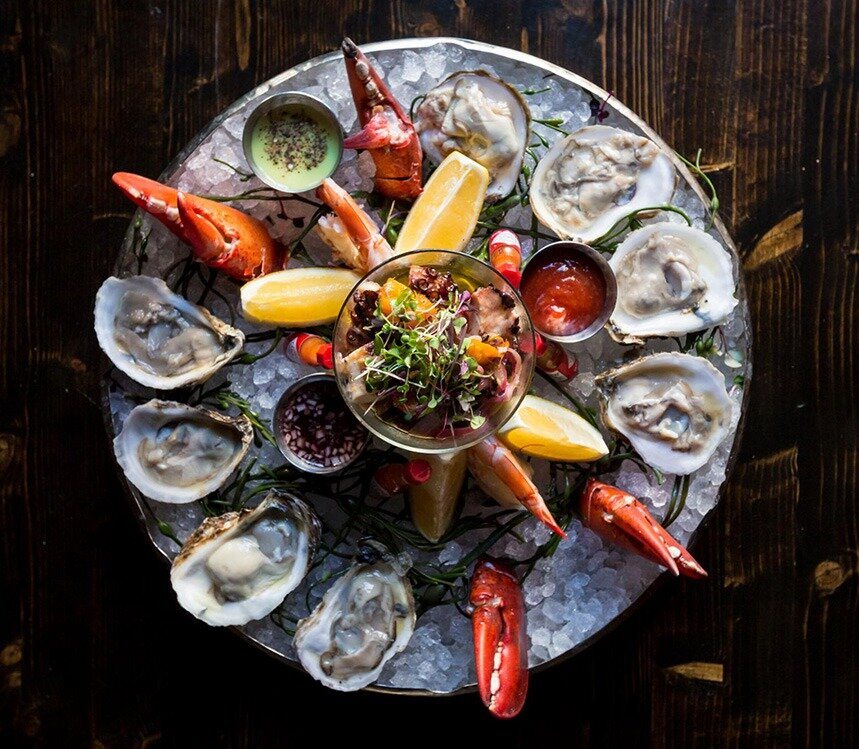
Prince Edward Island oysters by the half dozen and dozen, a seafood platter for two built around half a Maine lobster, and a grilled octopus with sweet peppers and red wine vinegar.
Read more →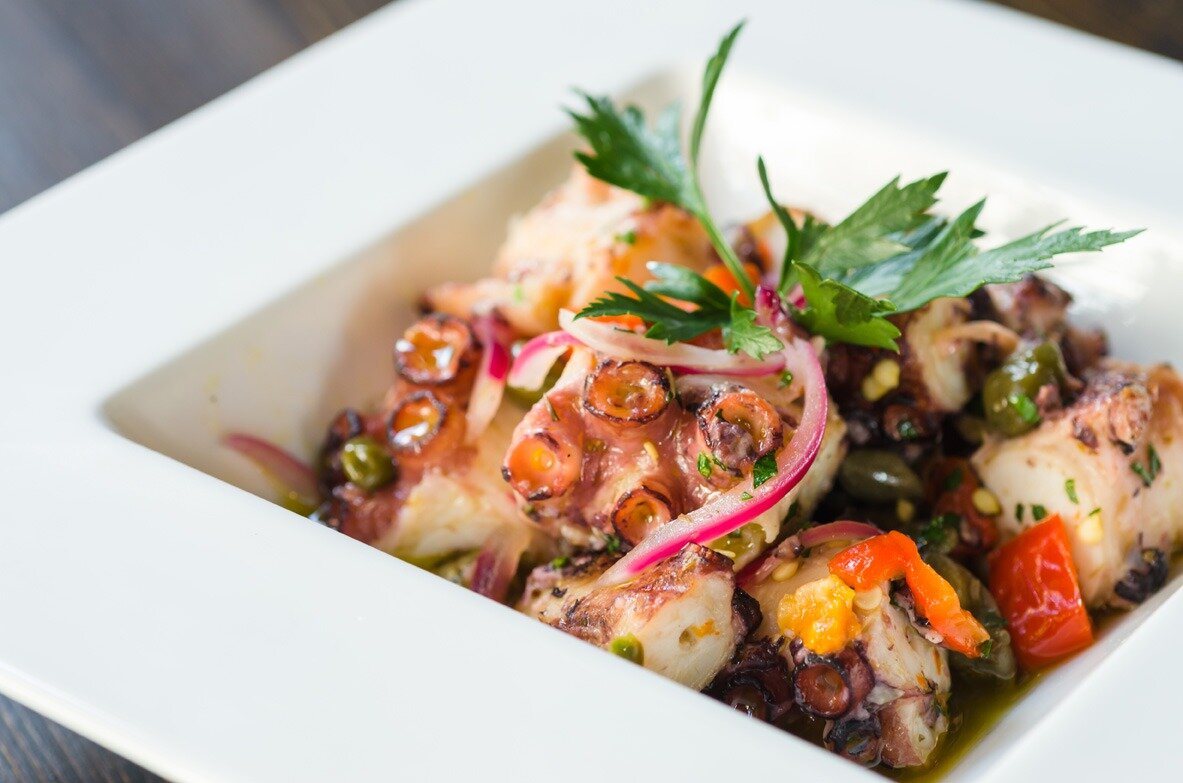
Black seabass ceviche
Leche de tigre, orange segments, jalapeño and Spanish pimentón — a dish with more in common with Lima than with Midtown, and a deliberate counterweight to the richness ahead.
Read more →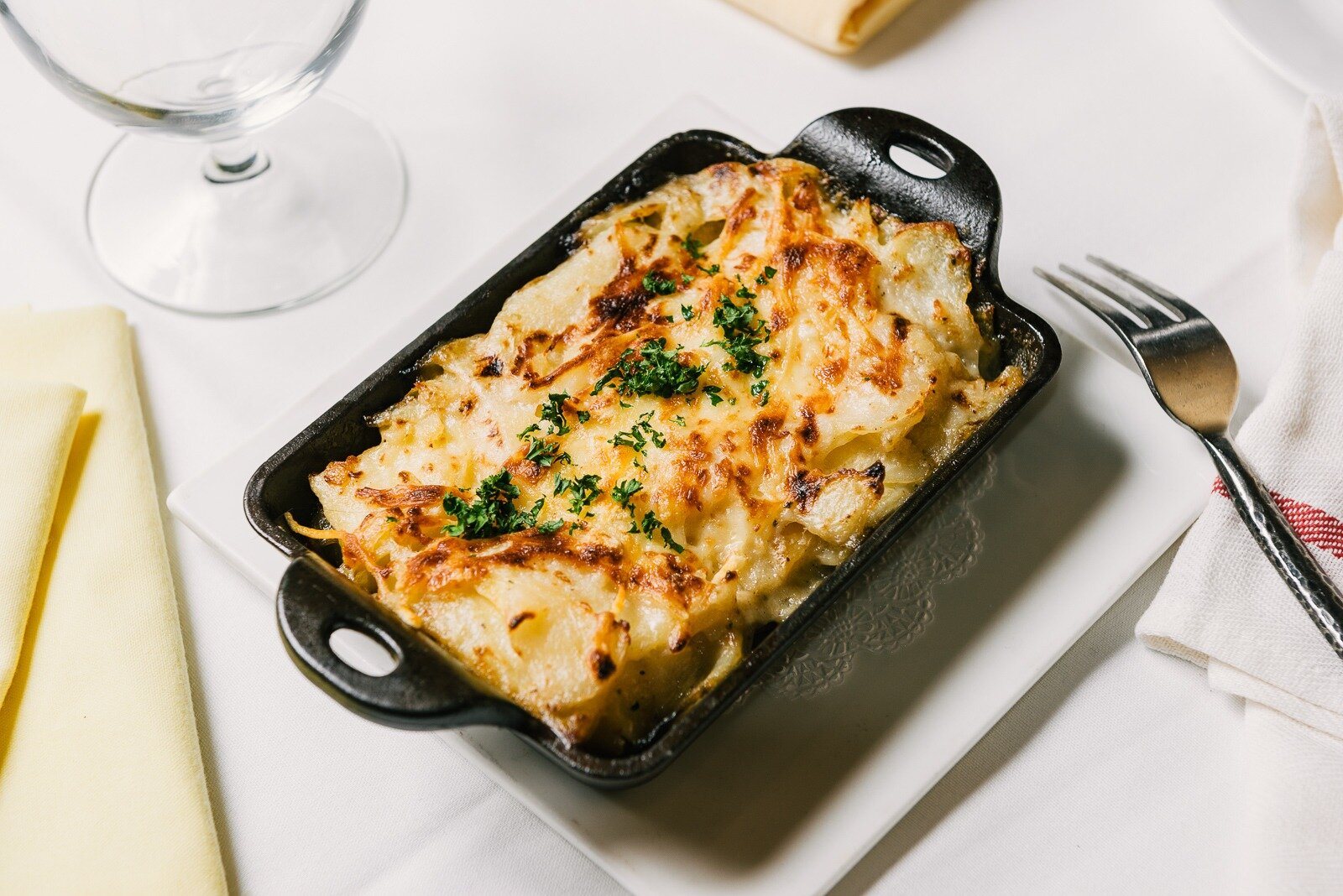
Classic burrata
Heirloom tomatoes, roasted mini peppers and baby arugula. The salad section also carried a Mediterranean plate with feta and Kalamata olives, and a Caesar with garlic croutons and shaved Parmesan.
Read more →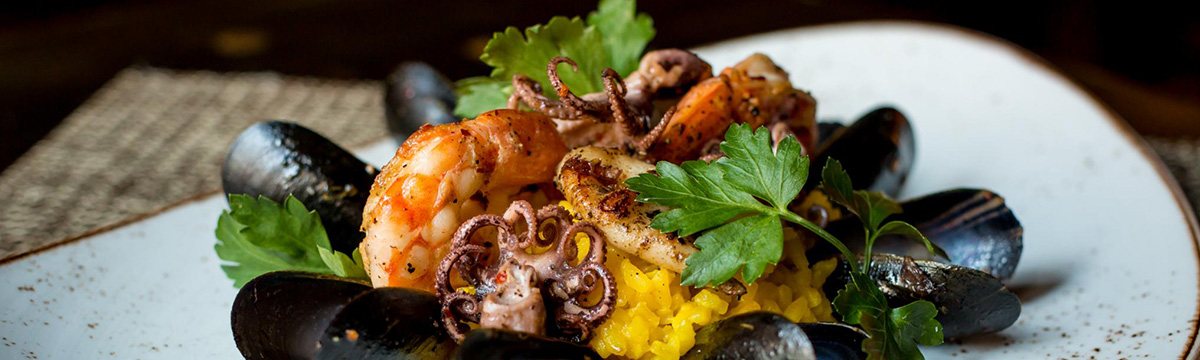
Artisan fresh pasta
Lobster linguini with half a lobster tail, cacio e pepe with imported Parmigiano Reggiano, spaghetti pomodoro, and a black truffle and wild mushroom risotto.
Read more →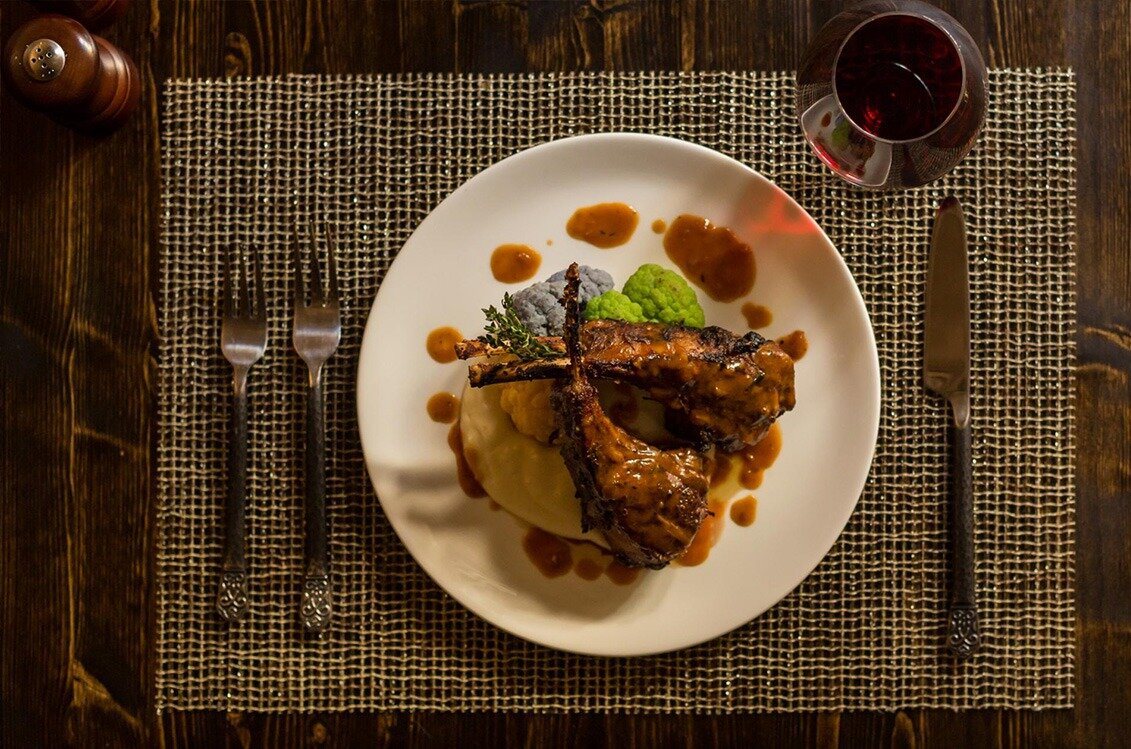
Grilled lamb chops
Honey-glazed carrots and a smoked aubergine tahini purée — the Mediterranean thread that ran quietly through the whole menu.
Read more →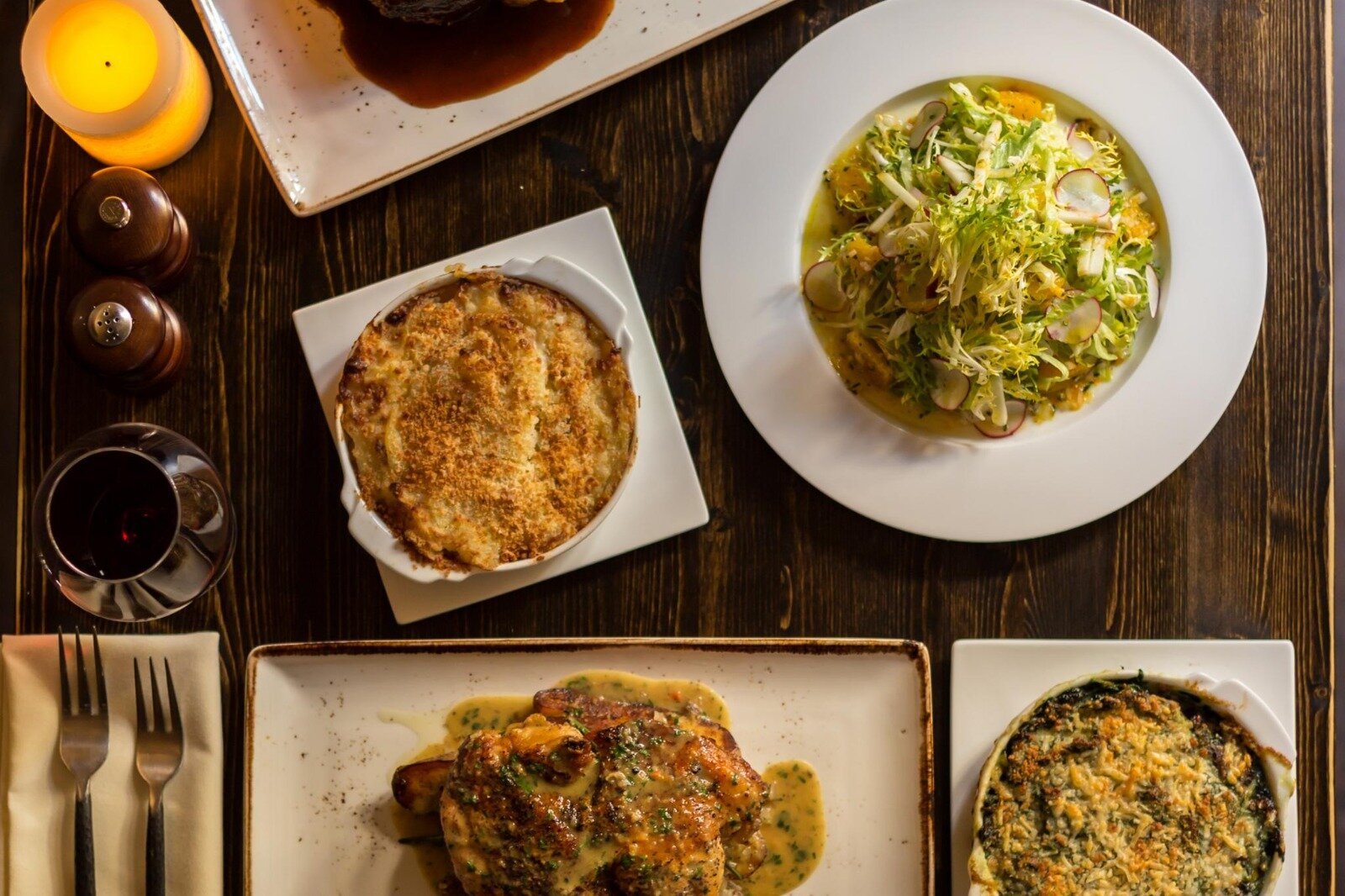
The supporting cast
Twice-baked potatoes, gratins, creamed greens and roasted vegetables, served family style in the American steakhouse tradition.
Read more →The rooms
The building sits mid-block on East 53rd Street, and the interior was arranged as three connected spaces rather than one large room — a layout that let the restaurant run a walk-in bar trade and a private event at the same time without either intruding on the other.
The dining room
White linen, dark wood and warm low lighting, laid out for conversation rather than spectacle. The tables were spaced more generously than the Midtown average, which matters at a restaurant where a three-ounce portion of beef is meant to be examined and discussed.
The bar
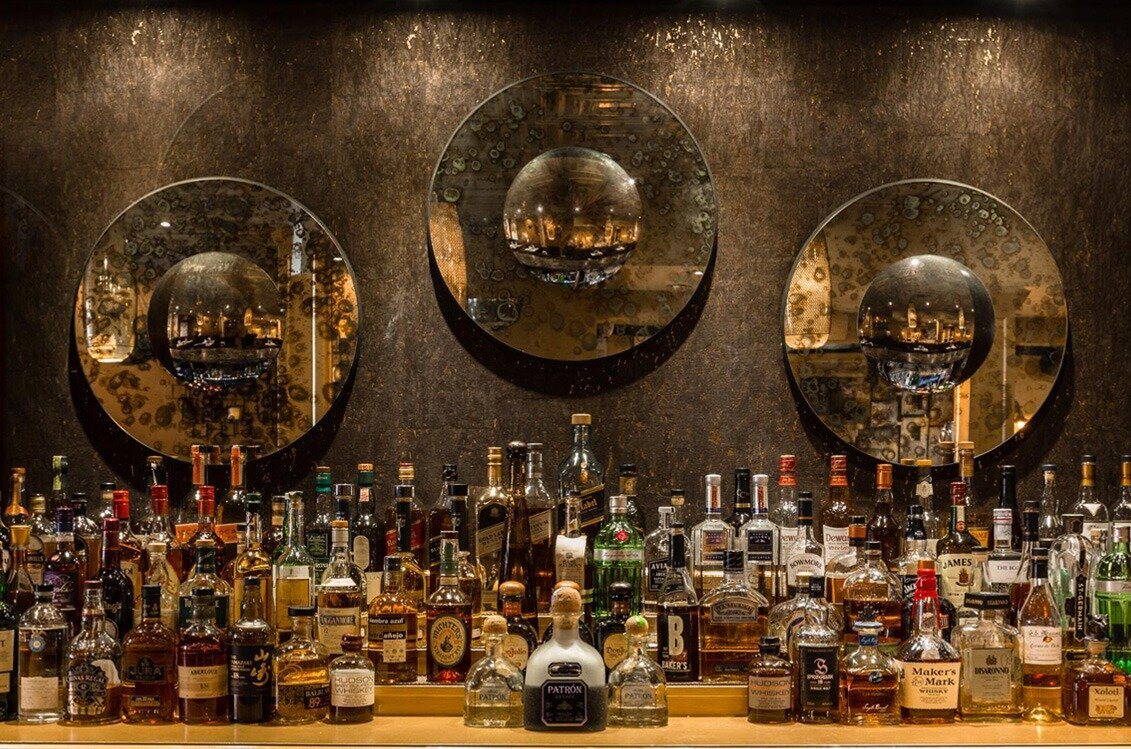
A long bar with an unusually deep back wall of whiskey and wine. Bar seating carried the full menu, and for solo diners it was the most practical way to eat a Kobe tasting without committing to a full dinner.
The lounge and private space
A separate lounge handled private hire, from small corporate dinners to full buyouts. The wine list was one of the restaurant's quieter strengths, recognised in city-wide roundups more than once.
Where it sits in Midtown East
316 East 53rd Street places the restaurant between First and Second Avenues, on the eastern edge of Turtle Bay and a block from Sutton Place. This is a quieter part of Midtown than the blocks west of Lexington — residential above street level, diplomatic in character because of the United Nations a few streets south, and historically home to a dense cluster of steakhouses serving the corporate expense-account trade.
The practical consequence for a diner is that the immediate neighbourhood is walkable and calm after seven in the evening, and the transit connection is straightforward: the E and M at Lexington Avenue/53rd Street, the 6 at 51st Street, and the crosstown bus on 50th and 49th.
Reference details
As historically listed
Address
316 East 53rd Street, New York, NY 10022, United States
Telephone
(212) 858-0646
Email
contact@212steakhouse.com
Service hours
Monday to Sunday, 5:00 PM – 10:00 PM
These details are reproduced from historical published material for reference. Restaurant operations change frequently — please verify current status, hours and availability directly with the venue before travelling or making plans.
Frequently asked questions
What was 212 Steakhouse known for?
It built its reputation on certified Japanese Kobe beef. The Midtown East dining room was the first New York restaurant admitted to the Kobe Beef Marketing & Distribution Promotion Association, the Hyogo Prefecture body that authenticates genuine Kobe, and for years it was the only East Coast restaurant able to serve the real thing under that certification.
Is “Kobe beef” on an American menu always genuine?
No. For most of the past two decades the phrase has been used loosely on US menus to mean “rich” or “marbled”, often describing domestic Wagyu crossbreeds or ordinary beef. Genuine Kobe is a narrow, legally defined designation: purebred Tajima-gyu cattle raised and slaughtered in Hyogo Prefecture, meeting strict grading thresholds, and traceable by individual identification number.
What is Tajima-gyu?
Tajima-gyu is the bloodline of Japanese Black cattle native to the mountainous Tajima region of northern Hyogo Prefecture. Every carcass certified as Kobe beef comes from a purebred Tajima-gyu animal. The lineage is prized for fine-grained muscle, thin bone and an unusually high proportion of edible meat.
Why is Kobe beef served in small portions?
Its fat is exceptionally soft and begins to soften at low temperatures, so the eating experience is intense and quickly filling. Steakhouses that serve certified Kobe generally sell it by the ounce, with three ounces a normal tasting portion rather than a full steak-sized plate.
What else appeared on the menu?
A conventional American steakhouse card ran alongside the Japanese beef: USDA Prime filet and New York strip, Australian Wagyu in dry-aged and bone-in formats, a Halal Canadian Prime section, a raw bar, fresh pasta and risotto, and a set of classic sides.
Where was the restaurant located?
At 316 East 53rd Street, between First and Second Avenues in Midtown East, Manhattan — a short walk from the Lexington Avenue/53rd Street subway station and the Sutton Place and Turtle Bay residential blocks.
Reading on beef, ageing and steakhouse culture
Long-form explainers on the things a steak menu assumes you already know.
Authentic Kobe Beef vs “Kobe-Style”: How to Tell the Difference
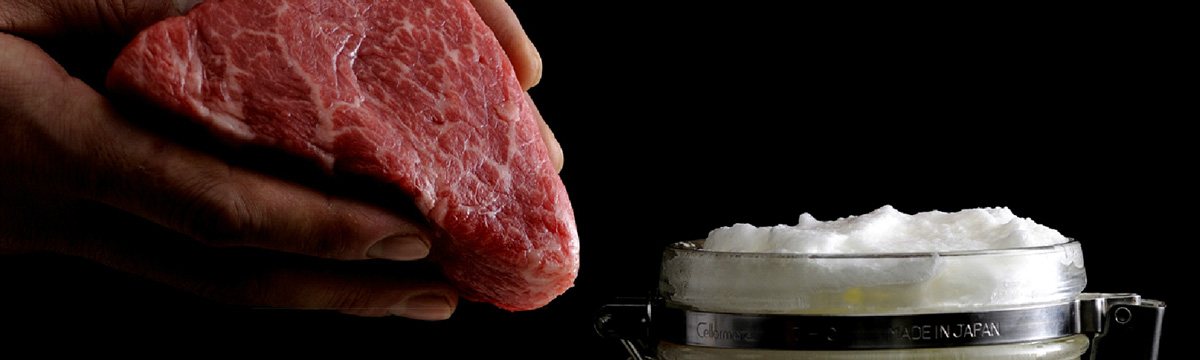
Six requirements separate certified Kobe from the marketing term that borrowed its name. Here is what each one means and how to check.
Read more →Wagyu Grading Explained: A5, BMS and What the Numbers Actually Mean
A5 is two separate scores stuck together, and the number most people care about isn't either of them. Here is how the scales actually work.
Read more →A Steakhouse Cuts Guide: Ribeye, Strip, Filet, Porterhouse and the Rest
Where each cut sits on the animal explains everything about how it eats. A practical guide to the whole menu.
Read more →