Authentic Kobe Beef vs “Kobe-Style”: How to Tell the Difference
Six requirements separate certified Kobe from the marketing term that borrowed its name. Here is what each one means and how to check.
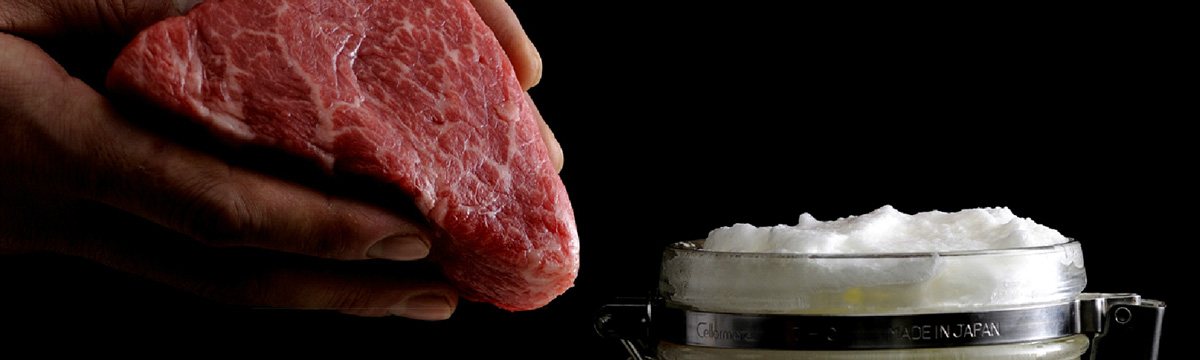
There is no other food term in the English-speaking world quite like “Kobe beef”. It refers to a real, narrowly defined, rigorously audited product from a single Japanese prefecture. It also appears on menus attached to hamburger sliders costing nine dollars. Both uses are common, and only one of them is accurate.
This is not a story about snobbery. Excellent beef is sold under a dozen honest names, and a Wagyu-cross burger can be a genuinely good thing to eat. The problem is that the price gap between certified Kobe and everything else is enormous, and the word is the only signal most diners have to go on. So it is worth knowing exactly what the certification requires, and what to ask when a menu uses the word.
The six requirements
Certification is administered from Hyogo Prefecture by the Kobe Beef Marketing & Distribution Promotion Association. A carcass qualifies only if it satisfies every one of the following. There is no partial credit.
1. Purebred Tajima-gyu
The animal must be a purebred Tajima-gyu bullock or virgin cow. Tajima-gyu is a strain within the Japanese Black breed, native to the mountainous Tajima region in the north of Hyogo. It is not enough to be Wagyu, and it is not enough to be Japanese Black. The bloodline is registered and tracked animal by animal.
2. Born, raised and slaughtered in Hyogo Prefecture
The entire life cycle happens inside the prefecture, and processing occurs at an approved facility there. This is the clause that disqualifies essentially every American product using the word. A Tajima-gyu calf exported to Texas and raised beautifully produces excellent beef that is not, and cannot become, Kobe.
3. A marbling score at the top of the scale
Japanese carcasses are scored on the Beef Marbling Standard, which runs from one to twelve. Kobe certification requires a score at the upper end. Beef that would be considered exceptional in most markets is routinely rejected here.
4. Yield grade A or B
Yield grade measures the proportion of usable meat from the carcass. Only the top two of three grades qualify.
5. Carcass weight below a defined ceiling
The one that surprises people. Larger carcasses are excluded. In an industry where scale usually improves economics, the Kobe standard deliberately caps it, on the reasoning that the qualities being protected do not survive being scaled up.
6. Individual identification and the association seal
Every certified carcass receives a ten-digit identification number traceable to the individual animal, along with the association's chrysanthemum seal. Restaurants serving genuine Kobe are expected to be able to produce documentation for the lot they are cutting from.
The taxonomy of everything else
None of the categories below are bad. They are simply different, and knowing which one you are being offered is the whole point.
| Term | What it actually means | Defined? |
|---|---|---|
| Kobe beef | Certified Tajima-gyu from Hyogo, individually numbered | Yes, strictly |
| Japanese A5 Wagyu | Top-graded Japanese beef from any prefecture, any qualifying breed | Yes |
| Matsusaka, Omi, Yonezawa | Other Japanese regional designations, each with its own standards | Yes |
| Australian Wagyu | Wagyu-genetics cattle raised in Australia, often crossbred, own marbling scale | Partly |
| American Wagyu | Usually Wagyu × Angus crossbreed raised in the United States | Loosely |
| “Kobe-style” | Nothing in particular | No |
| “Wagyu burger” | Frequently a small percentage of Wagyu trim in a blend | No |
Four questions that settle it
If a menu offers Kobe and you want to know what you are buying, these four questions will get you there without any awkwardness. Any restaurant genuinely serving certified beef will be pleased to answer them, because the paperwork is the entire selling point.
“Is this certified Kobe from Hyogo Prefecture?”
The direct question. A yes that comes with an explanation is a good sign. A yes that comes with a pause is not.
“Do you have the certificate or the identification number?”
The decisive question. Genuine importers supply documentation and restaurants generally display it, often framed near the entrance. If there is no number, there is no certification.
“How is it portioned?”
Certified Kobe is almost always sold by the ounce, from a minimum of two or three. A twelve-ounce “Kobe steak” at a conventional steak price is, on arithmetic alone, not what it says.
“What grade is it?”
A kitchen serving Japanese beef will know its marbling score. A kitchen serving something else will usually answer in adjectives.
Why the confusion existed in the first place
For roughly a decade in the 2000s and early 2010s, no Japanese beef was being imported into the United States at all, following restrictions tied to disease control. During exactly that period, the phrase “Kobe beef” spread across American menus faster than at any point before or since — which means that for years, every American use of the term was necessarily inaccurate.
When imports resumed, only a small number of restaurants nationally completed the process of association membership and verified supply. The arrival of genuinely certified Kobe in New York was covered as a business story by outlets including Forbes and Bloomberg, precisely because the gap between the term's use and its meaning had become newsworthy in its own right.
Is it worth the money?
Honestly, that depends on what you want from it. A three-ounce tasting portion of certified Kobe is one of the most distinctive eating experiences available in a Western restaurant, and it is genuinely unlike heavily marbled beef from anywhere else. It is also, per ounce, among the most expensive food you can order.
What it is not is a better version of a steak dinner. A forty-ounce dry-aged porterhouse and three ounces of Kobe are different propositions entirely, and anyone hoping the second will deliver the satisfactions of the first will be disappointed. Order it as a tasting, early in the meal, with something sharp alongside, and treat the rest of dinner as a separate matter.
About this site. 212steakhousenyc.com is an independent editorial publication. It is not affiliated with any restaurant, supplier or certification body mentioned here, and it takes no bookings or enquiries. Details about any venue should be verified directly before you act on them. See our editorial policy.
More from the blog
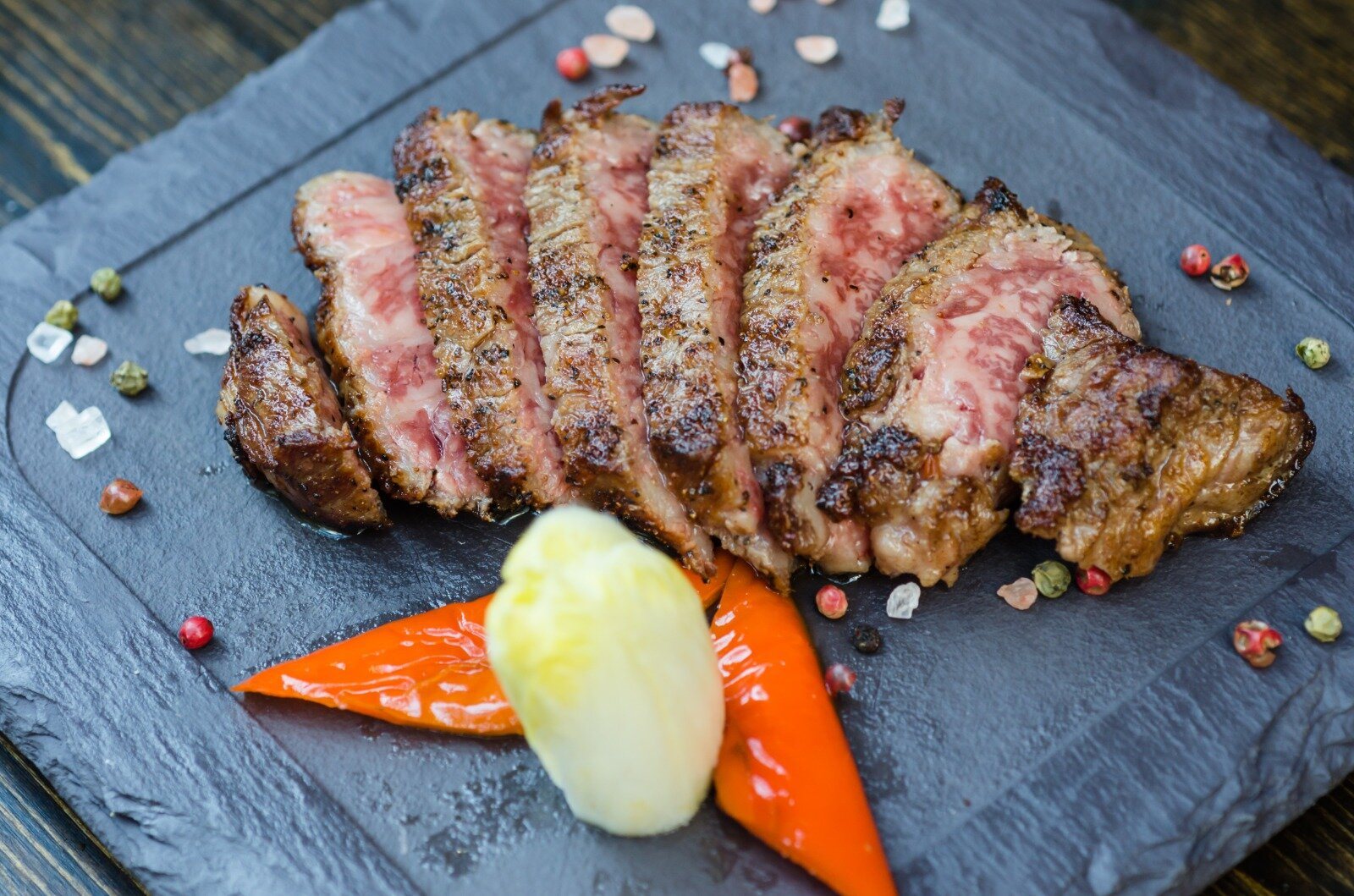
Wagyu Grading Explained: A5, BMS and What the Numbers Actually Mean
A5 is two separate scores stuck together, and the number most people care about isn't either of them. Here is how the scales actually work.
Read more →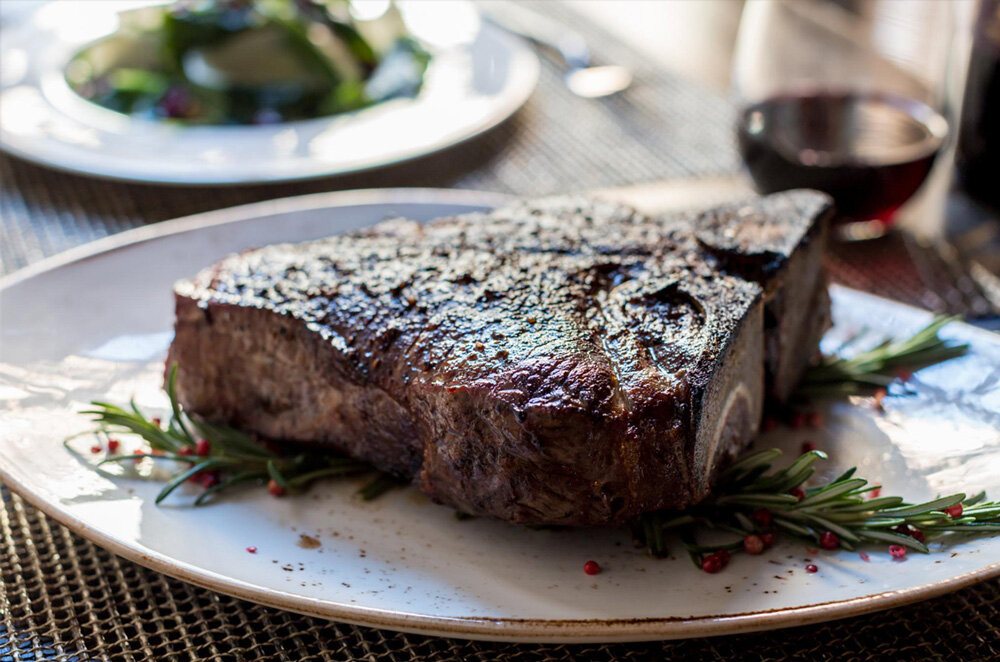
A Steakhouse Cuts Guide: Ribeye, Strip, Filet, Porterhouse and the Rest
Where each cut sits on the animal explains everything about how it eats. A practical guide to the whole menu.
Read more →
Dry-Aged vs Wet-Aged Beef: What Actually Changes
Two processes, two completely different results. What the weeks in a locker actually do to the meat.
Read more →