The Midtown East Steakhouse District: How It Got That Way
A few square blocks east of Lexington hold more serious steakhouses than most American cities. There are specific reasons for that.
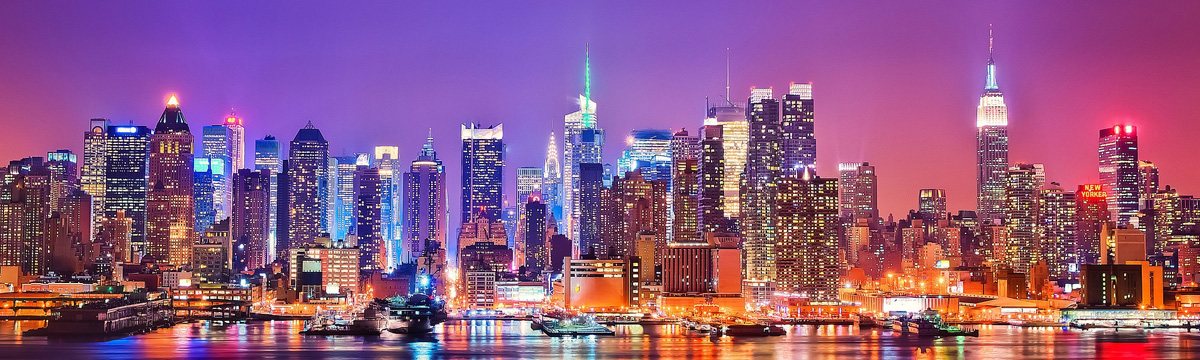
Walk east from Lexington Avenue anywhere between 45th and 56th Street and you pass more steakhouses in fifteen minutes than exist in most American cities. This is not an accident of taste. It is the residue of a specific commercial arrangement that shaped Manhattan dining for roughly seventy years, and its traces are still legible in how these rooms are laid out and priced.
The chophouse inheritance
New York's steakhouse tradition descends from two nineteenth-century sources. The first is the English chophouse: a plain room serving grilled meat to men doing business, with minimal ceremony and no pretence of being anything else. The second is the German-American beer hall and butcher culture that arrived with mid-century immigration, which brought the aged beef, the enormous portions and the family-style side dishes that still define the format.
The result is a genuinely American hybrid, and it settled into a particular formula: dark wood, white linen, an oversized bar, a wine list deeper than the food menu would suggest, and portions scaled for sharing.
Why east of Lexington
Three forces put the steakhouses where they are.
Grand Central and the commuter economy
The terminal opened in its current form in 1913 and reorganised Midtown around itself. Office towers followed the rail connection, and by mid-century the blocks around Park and Lexington held a dense concentration of corporate headquarters. A restaurant that could seat a table of six businessmen at seven o'clock and turn it by nine had a reliable trade.
The expense-account dinner
For decades, US tax treatment of business entertainment was generous enough that the corporate dinner functioned as a semi-official institution. A steakhouse was the ideal venue: expensive enough to signal seriousness, conservative enough to be unobjectionable, loud enough for private conversation, and structured so that the bill could grow substantially without anyone ordering anything strange. Successive reforms to the deduction narrowed this considerably, but by then the restaurants were established and the habit had outlived its tax advantage.
The United Nations
The UN headquarters opened at First Avenue and 46th Street in 1952 and brought a permanent diplomatic population to Turtle Bay. That population wanted formal dining rooms that could handle delegations, and it was internationally varied enough to support menus that a purely domestic clientele would not have. The unusual presence of Halal beef sections in a handful of Midtown East steakhouses is a direct consequence of this, decades later.
What Turtle Bay is actually like
The neighbourhood running roughly from 43rd to 53rd Streets, east of Lexington, is far quieter than its position suggests. Behind the avenue frontages it is largely residential: brownstones, mid-century apartment blocks, and a handful of the city's best small public spaces, including the waterfall wall at Greenacre Park on East 51st.
Sutton Place, beginning around 53rd Street and running north along the East River, is among the most expensive residential enclaves in the city and has been since the 1920s. The combination — office towers to the west, diplomats to the south, considerable residential wealth to the north and east — is why a restaurant on East 53rd Street between First and Second could sustain a Japanese beef programme that would struggle almost anywhere else in the country.
How the district changed
The steakhouse stopped being conservative
For most of the twentieth century, a steakhouse menu was fixed by convention: shrimp cocktail, wedge salad, Prime beef, creamed spinach, cheesecake. From the 1990s onward that consensus broke. Kitchens introduced raw bars with genuine ambition, Mediterranean and Japanese influences, serious pasta sections, and vegetable cooking that was not an afterthought.
Imported beef arrived
The reopening of Japanese beef imports in the 2010s changed the top of the market decisively. A handful of restaurants pursued proper certification, and the presence of genuine Kobe or high-graded A5 became a way for a room to distinguish itself in a district where every competitor already served excellent Prime.
The expense account contracted
Tax reform, then remote work, then a permanently altered pattern of office occupancy have all thinned the weekday corporate dinner. Midtown East steakhouses have responded by pushing harder into private events, weddings and destination dining — which is why the event pages of these restaurants are now often more elaborate than their dinner menus.
Turnover accelerated
Rents in the district are unforgiving and the trade that supported it has changed shape. Rooms that ran for decades have closed; others have changed hands, been renovated, or reopened under new names. This is normal for Manhattan, but it is worth remembering when reading anything about a specific restaurant: the information ages quickly, and the only reliable check is a direct one.
What survives
The physical logic of the district has not changed. It is still walkable, still well connected by the E, M and 6 lines, still quiet after seven, and still home to a concentration of serious beef cooking that has no real equivalent elsewhere in the United States. Whatever happens to individual rooms, the reasons they clustered here in the first place have proved remarkably durable.
About this site. 212steakhousenyc.com is an independent editorial publication. It is not affiliated with any restaurant, supplier or certification body mentioned here, and it takes no bookings or enquiries. Details about any venue should be verified directly before you act on them. See our editorial policy.
More from the blog
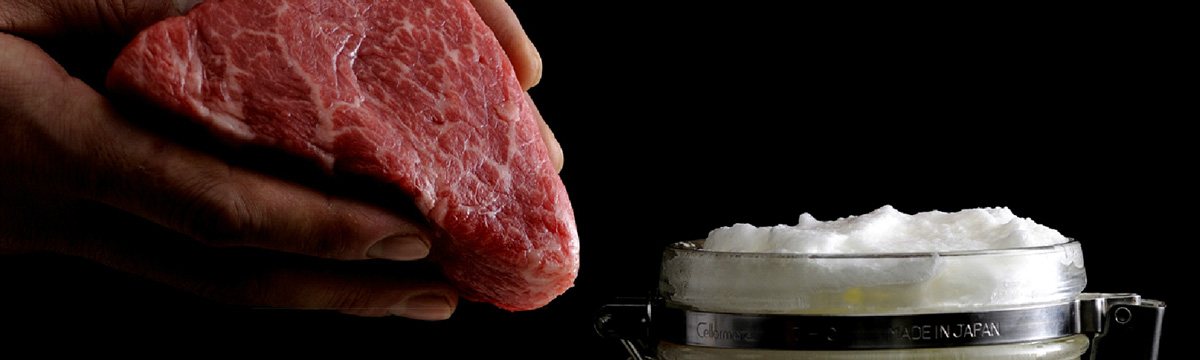
Authentic Kobe Beef vs “Kobe-Style”: How to Tell the Difference
Six requirements separate certified Kobe from the marketing term that borrowed its name. Here is what each one means and how to check.
Read more →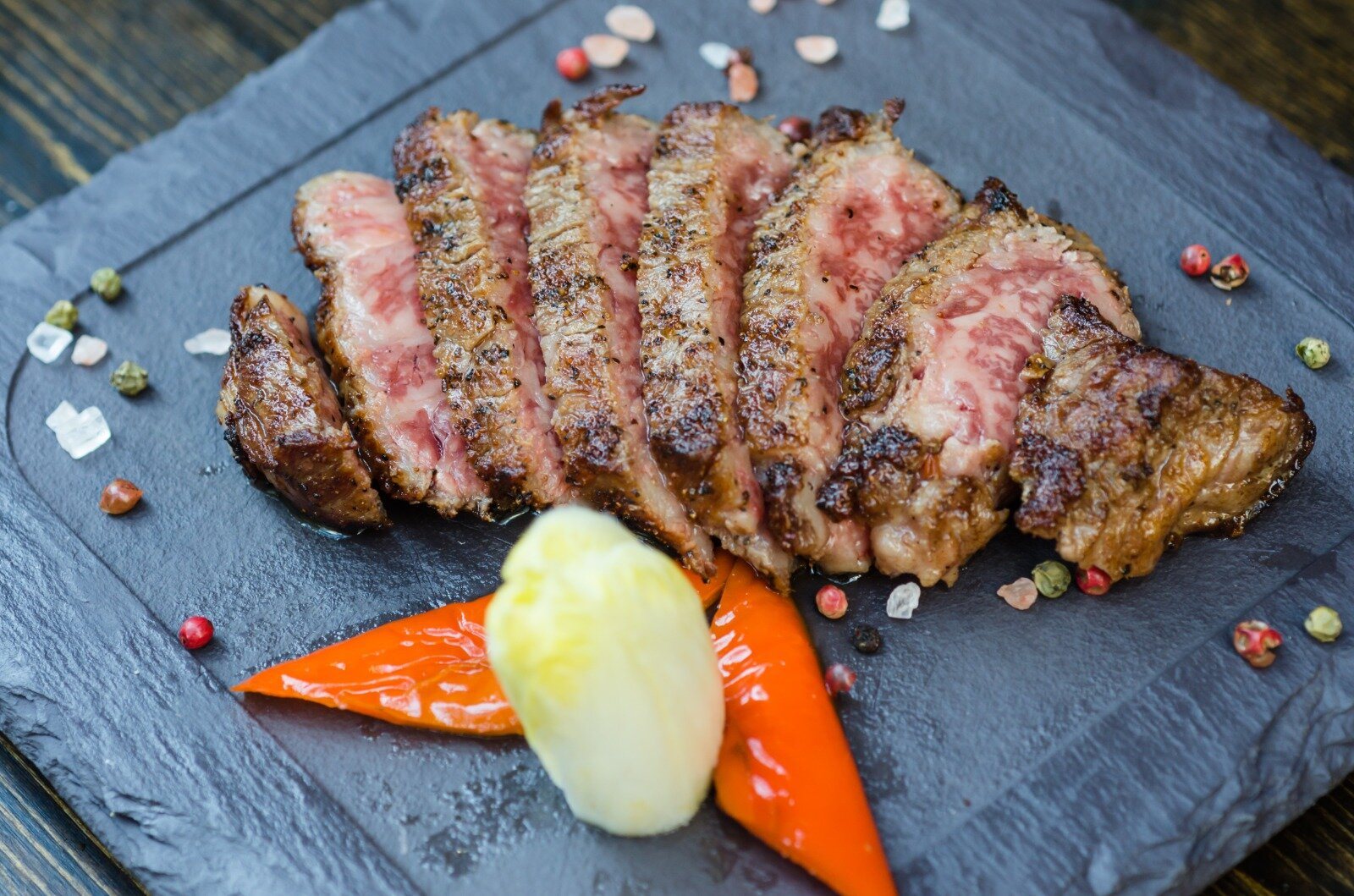
Wagyu Grading Explained: A5, BMS and What the Numbers Actually Mean
A5 is two separate scores stuck together, and the number most people care about isn't either of them. Here is how the scales actually work.
Read more →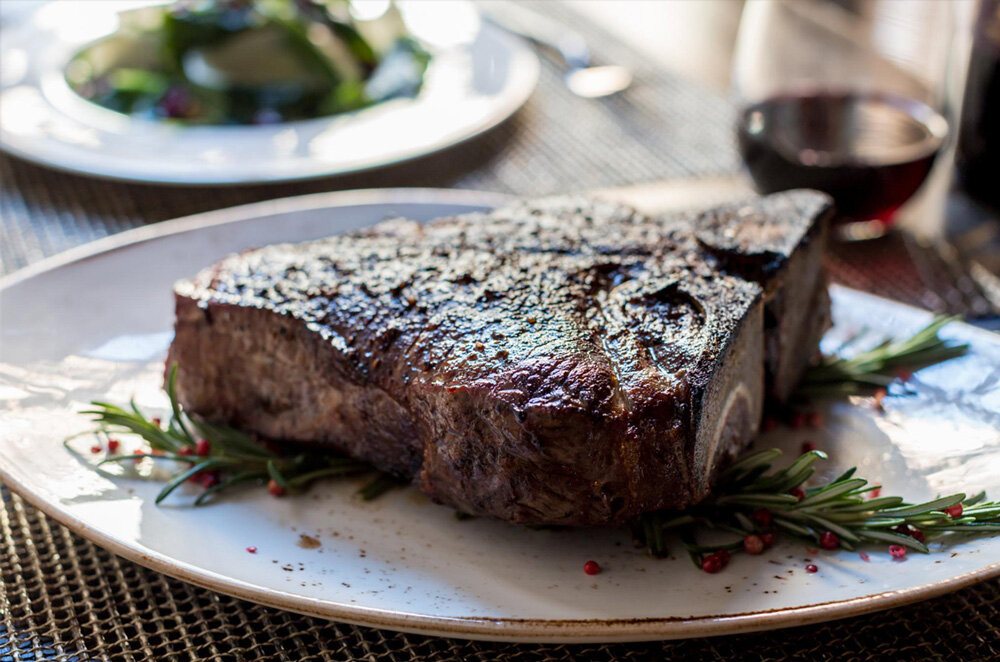
A Steakhouse Cuts Guide: Ribeye, Strip, Filet, Porterhouse and the Rest
Where each cut sits on the animal explains everything about how it eats. A practical guide to the whole menu.
Read more →