Wine Pairing for Steak: Beyond the Default Cabernet
Cabernet with steak is a good answer to a question most people never finish asking. The interesting part starts after it.
The standard advice — big red wine with red meat — is not wrong. It is simply the first step of a longer argument, and stopping there means missing most of what makes the pairing work and all of the value on a steakhouse list.
Why tannin and fat work together
Tannins are phenolic compounds from grape skins, seeds and oak. On their own they bind to proteins in your saliva and produce the drying, grippy sensation of a young Bordeaux.
Introduce fat and protein and the tannins bind to those instead. The wine reads softer and rounder; the fat is scoured from the palate, leaving it clean for the next bite. Each makes the other more enjoyable. This is the whole mechanism, and everything else follows from it.
Two immediate consequences:
- Fattier cuts need more tannin. Ribeye can take a structured wine that would overwhelm filet.
- Leaner cuts need less. A tannic monster against filet mignon simply flattens it.
Matching the wine to the cut
| Cut | Character | Pairs with |
|---|---|---|
| Filet mignon | Lean, mild, fine texture | Pinot Noir, Barbaresco, cru Beaujolais, mature Rioja |
| New York strip | Balanced, distinct grain | Bordeaux blends, Chianti Classico, northern Rhône Syrah |
| Ribeye | Rich, heavily marbled | Cabernet Sauvignon, Barolo, Malbec, Châteauneuf-du-Pape |
| Porterhouse | Two cuts at once | Something in the middle: Sangiovese, mid-weight Bordeaux |
| Skirt / hanger | Intense, open grain | Malbec, Zinfandel, Côtes du Rhône |
| Dry-aged, 45 days + | Funky, concentrated | Mature Bordeaux, aged Rioja Gran Reserva, Barolo |
| Japanese Wagyu / Kobe | Extremely rich, small portion | See below — the rules change |
Why Wagyu breaks the rules
High-marbled Japanese beef is not simply a fattier steak. The fat softens at low temperature and coats the palate almost immediately, and portions are small. A powerful tannic red does two unhelpful things: it flattens the beef's delicacy, and its tannins are neutralised so completely by the fat that the wine tastes thin and stripped.
Better directions:
Champagne, and specifically a serious one
Acidity and fine bubbles cut through the fat without competing. A vintage blanc de blancs against Kobe is one of the great pairings, and almost nobody orders it.
Aged red Burgundy
Perfumed, moderate in tannin, high in acidity. It sits beside the beef rather than fighting it.
Sake, especially junmai daiginjo
Low in tannin, high in umami, and it shares a cultural logic with the beef. Increasingly the default recommendation from sommeliers who work with Japanese beef regularly.
Aged Rioja
Gran Reserva has softened tannins, savoury development and enough acidity to work. It is also usually the best value on this list by a wide margin.
Where the value is on a steakhouse list
Napa Cabernet is a fine pairing and the most heavily marked-up category on almost every list in America. If you want the same job done for less:
- Left Bank Bordeaux from an unfashionable vintage. Cabernet-dominant, structured, and priced far below Napa equivalents.
- Châteauneuf-du-Pape and southern Rhône. Warmth and body without Cabernet's price premium.
- Aglianico from Taurasi or Vulture. Serious tannic structure at a fraction of Barolo's cost.
- Douro reds. Portugal's dry reds from port country are dense, structured and consistently undervalued.
- Aged Rioja. Reliably the best value mature red on most lists.
- Cahors. The original home of Malbec, firmer and more savoury than Argentine versions, and cheaper.
Practical rules at the table
Ask the sommelier properly
Do not say “something around a hundred”. Say “we are having the porterhouse and a Wagyu tasting, we like savoury reds over fruity ones, and we would like to stay near a hundred dollars.” That question gets a genuinely good answer. The vague one gets you whatever needs selling.
Consider two half bottles
If the table is eating across a wide range — a lean filet and a heavily marbled Wagyu — two half bottles, or a glass pairing for the premium course, serves the food better than one compromise bottle.
Serving temperature matters more than the label
Most steakhouses serve red wine too warm. Above roughly 18°C, alcohol dominates and fruit flattens. Asking for an ice bucket for a red is not eccentric; it is the single easiest improvement you can make to a bottle.
White wine is not a mistake
An oak-aged white Rioja, a mature white Burgundy or a top Chenin has enough weight and acidity to handle steak, and works particularly well with a raw bar course beforehand.
About this site. 212steakhousenyc.com is an independent editorial publication. It is not affiliated with any restaurant, supplier or certification body mentioned here, and it takes no bookings or enquiries. Details about any venue should be verified directly before you act on them. See our editorial policy.
More from the blog
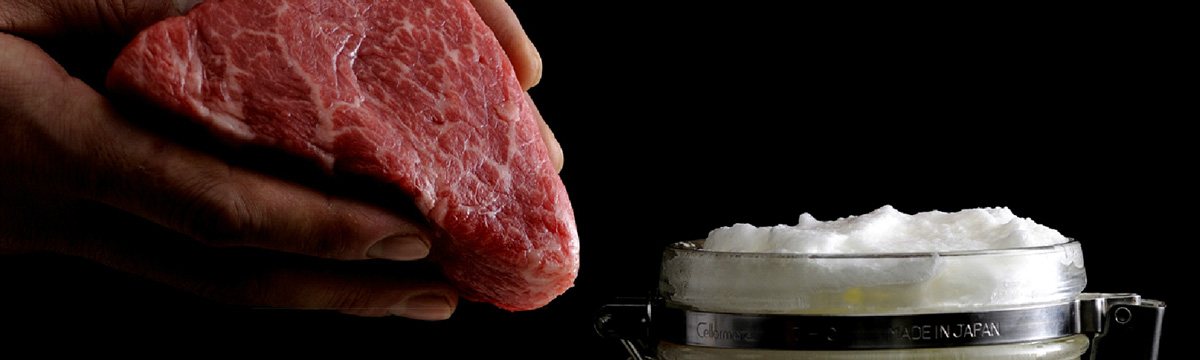
Authentic Kobe Beef vs “Kobe-Style”: How to Tell the Difference
Six requirements separate certified Kobe from the marketing term that borrowed its name. Here is what each one means and how to check.
Read more →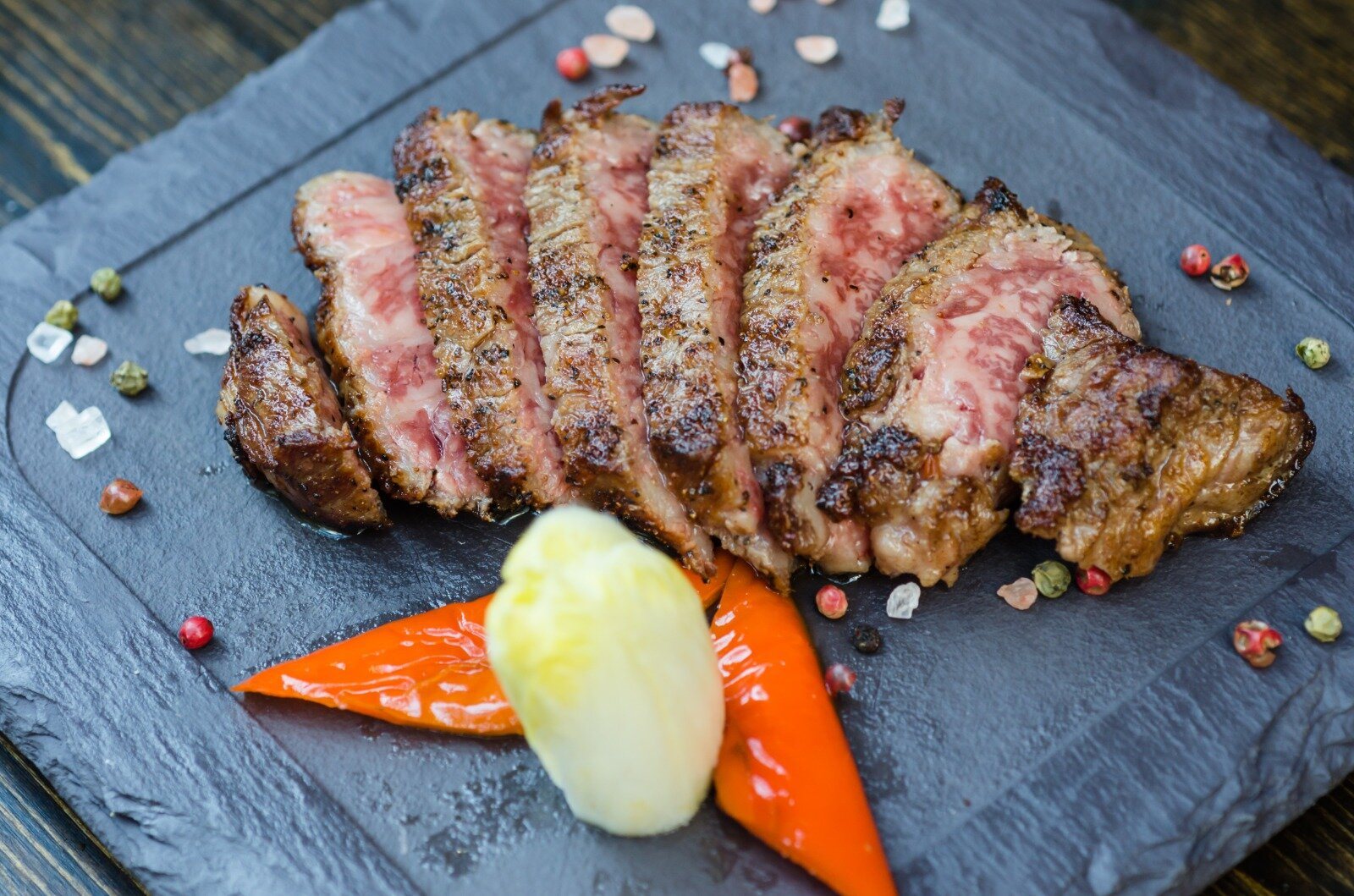
Wagyu Grading Explained: A5, BMS and What the Numbers Actually Mean
A5 is two separate scores stuck together, and the number most people care about isn't either of them. Here is how the scales actually work.
Read more →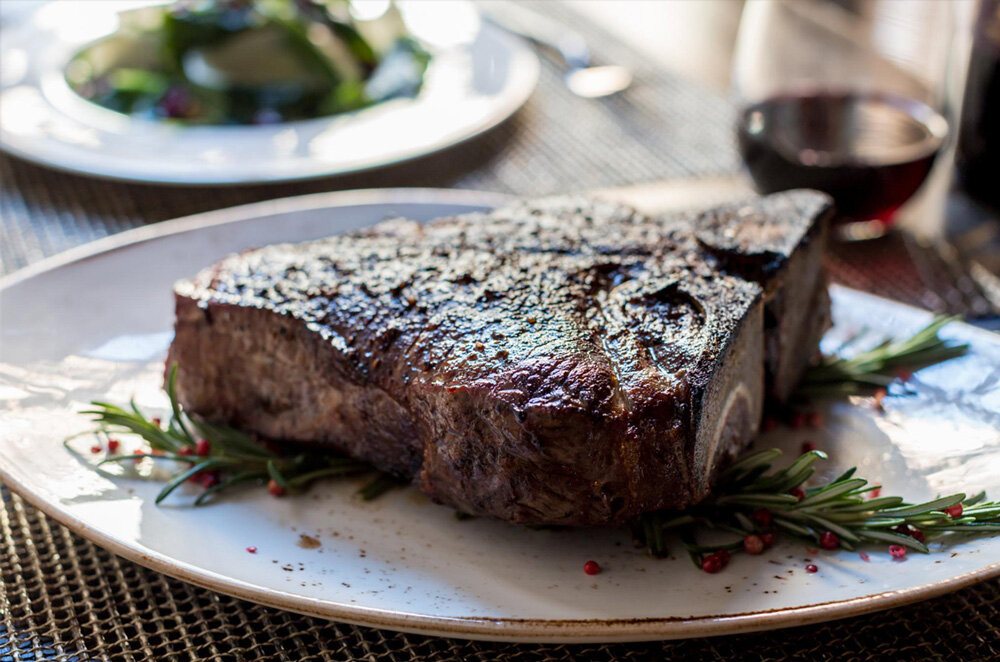
A Steakhouse Cuts Guide: Ribeye, Strip, Filet, Porterhouse and the Rest
Where each cut sits on the animal explains everything about how it eats. A practical guide to the whole menu.
Read more →